
The Transition to State Electricity Regulation: Key Takeaways & The New SERC Directory
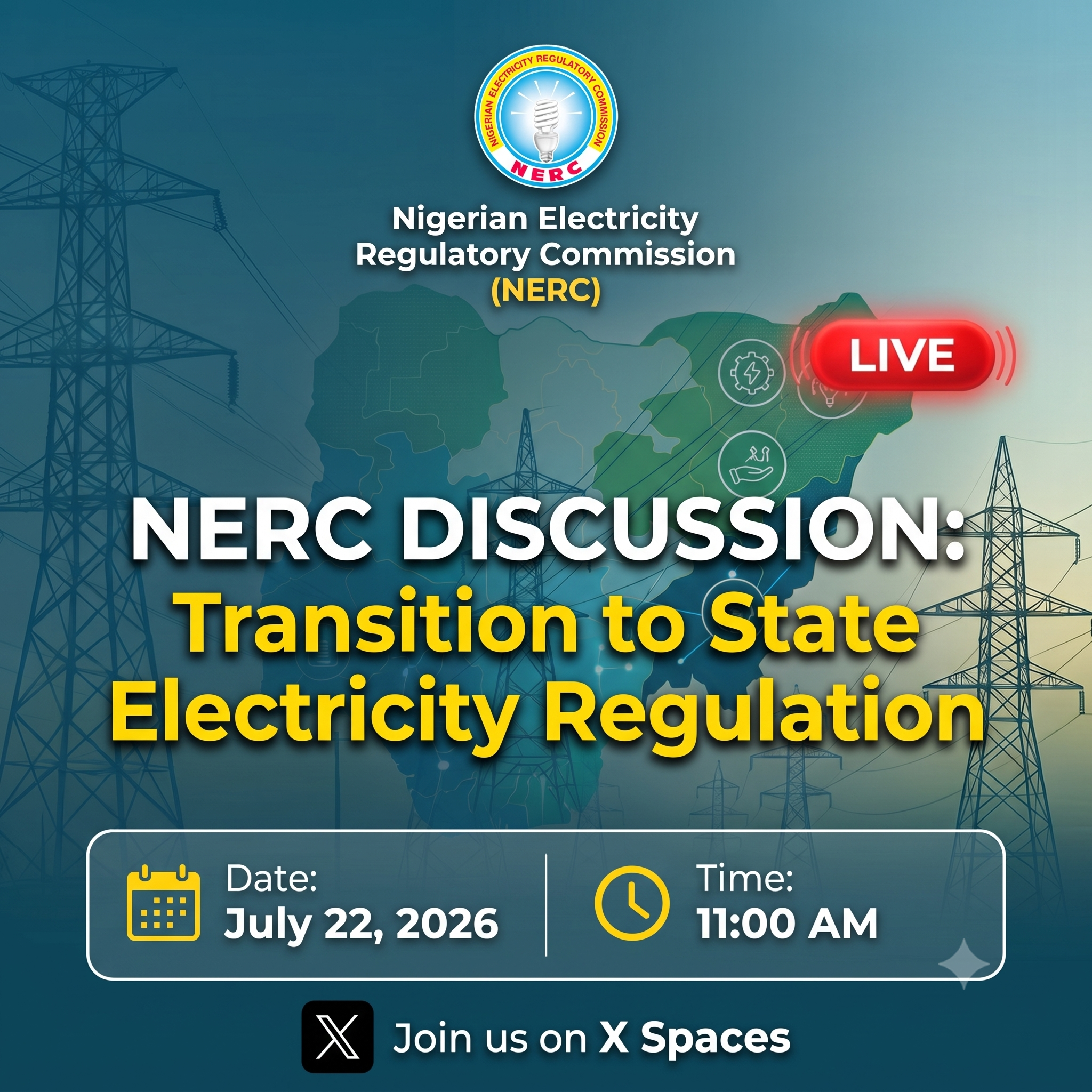
The landscape of the Nigerian power sector is changing rapidly, with 16 states having fully transitioned to state electricity regulation. If you missed our recent live X-Spaces broadcast, you can listen to the full recording here.
Below, we have summarized the crucial points discussed by our expert panel regarding what this decentralization means for consumers, how the market is adapting, and where you can find your new local regulator.
The Legal Framework: The Electricity Act 2023
The transition is rooted in significant legislative changes, which were broken down by Kabir Adamu Garkuwa from the Legal, Licensing, and Compliance division.
-
The Electricity Act 2023, signed by President Bola Ahmed Tinubu, legally decentralized the electricity market.
-
This legislation repealed the Electric Power Sector Reform Act of 2005.
-
The repeal ended NERC's era as the sole regulator for the entire Nigerian Electricity Supply Industry.
-
States are now legally empowered to establish their own regulatory bodies to oversee intrastate electricity generation, transmission, and distribution.
A New Path for Consumer Complaints
One of the most immediate impacts of this transition involves how electricity disputes are handled. Atiseer from the Customer Complaints Unit detailed the new escalation path.
-
For customers living in the 16 transitioned states, the dispute resolution process has officially changed.
- Customers must still first report their issues to their local distribution company, which operates as a subsidiary company (SubCo) in transitioned states.
- If a complaint is not resolved satisfactorily within the mandated 15-day period, the customer should no longer escalate the issue to a NERC Forum Office.
- Instead, consumers must escalate their unresolved disputes directly to their respective State Electricity Regulatory Commission (SERC).
- NERC is no longer involved in the process of resolving localized complaints within states that have established their own regulatory frameworks.
Fostering Collaboration with FoNER
With multiple state regulators now active, Pamela Akubue addressed how the sector avoids confusion and maintains harmony through FoNER.
-
FoNER stands for the Forum of Nigerian Electricity Regulators.
-
The body was officially inaugurated on March 25, 2026, to foster coordination between federal and state regulators.
-
It serves as a collaborative platform for knowledge exchange, capacity building, research, and harmonizing policies across the decentralized market.
-
FoNER ensures that newly established state regulators can learn from the shared experiences of NERC and other peer states.
Introducing the Official SERC Directory
To ensure a seamless experience for consumers navigating these changes, Ibrahim Yusuf from Corporate Communication announced the launch of a new, centralized tool.
-
NERC has launched the official SERC Directory to help electricity customers, investors, and stakeholders easily contact their state regulators.
-
The centralized directory provides verified contact information, including official websites, email addresses, phone numbers, physical office addresses, and social media handles.
-
NERC will continue to update this directory regularly to maintain its accuracy as additional states complete their regulatory transition.
Find Your State Electricity Regulator Today: Access the SERC Directory and connect with your local State Electricity Regulatory Commission by visiting: www.nerc.gov.ng/resources/sercs.